Skeuomorphic Desktops Are a Rendering Problem, Not a Joke
A skeuomorphic Wayland desktop like DEsk taxes GPU pipelines in ways flat UI never does. Here's what ray tracing a desktop actually costs.
 James Whitfield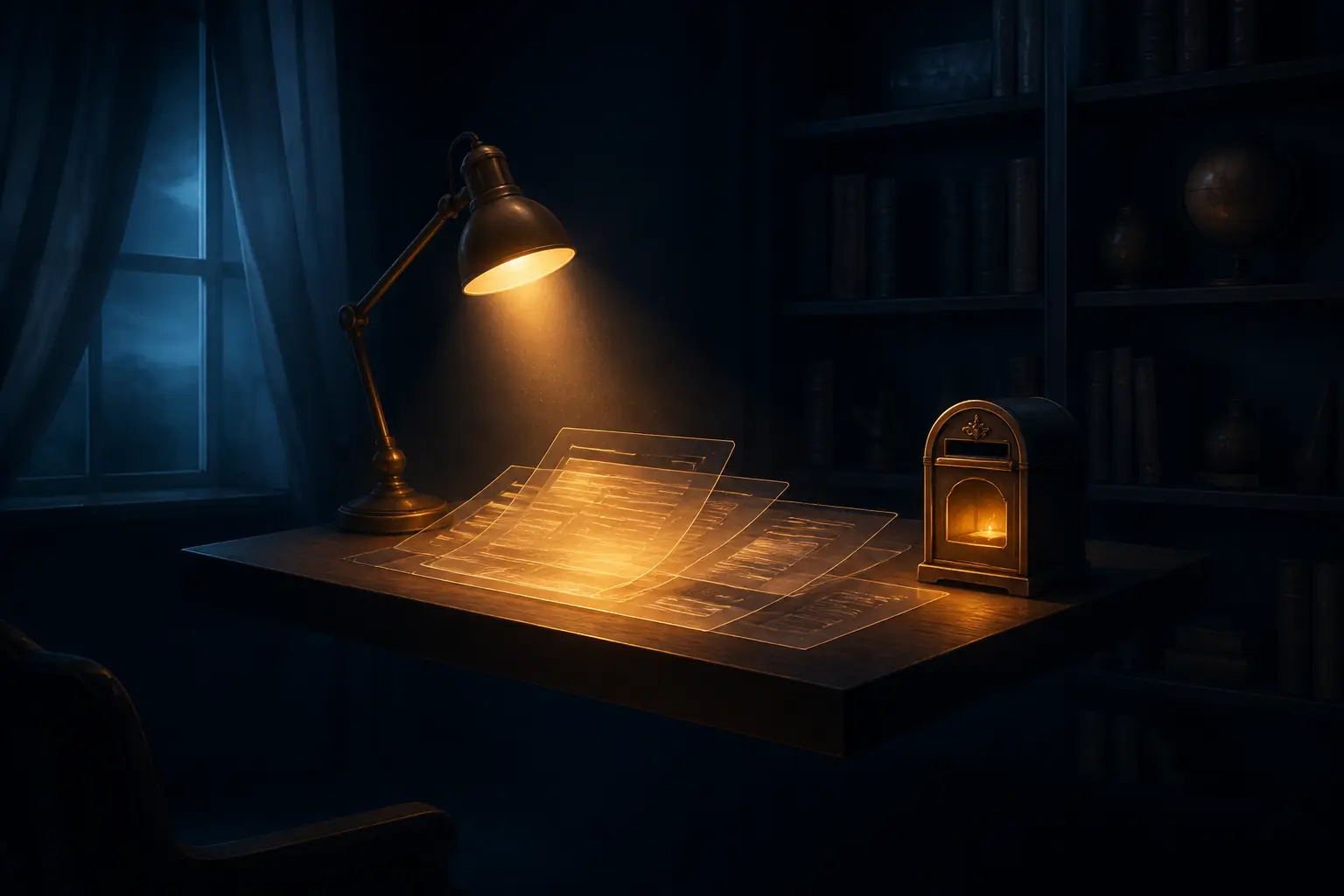
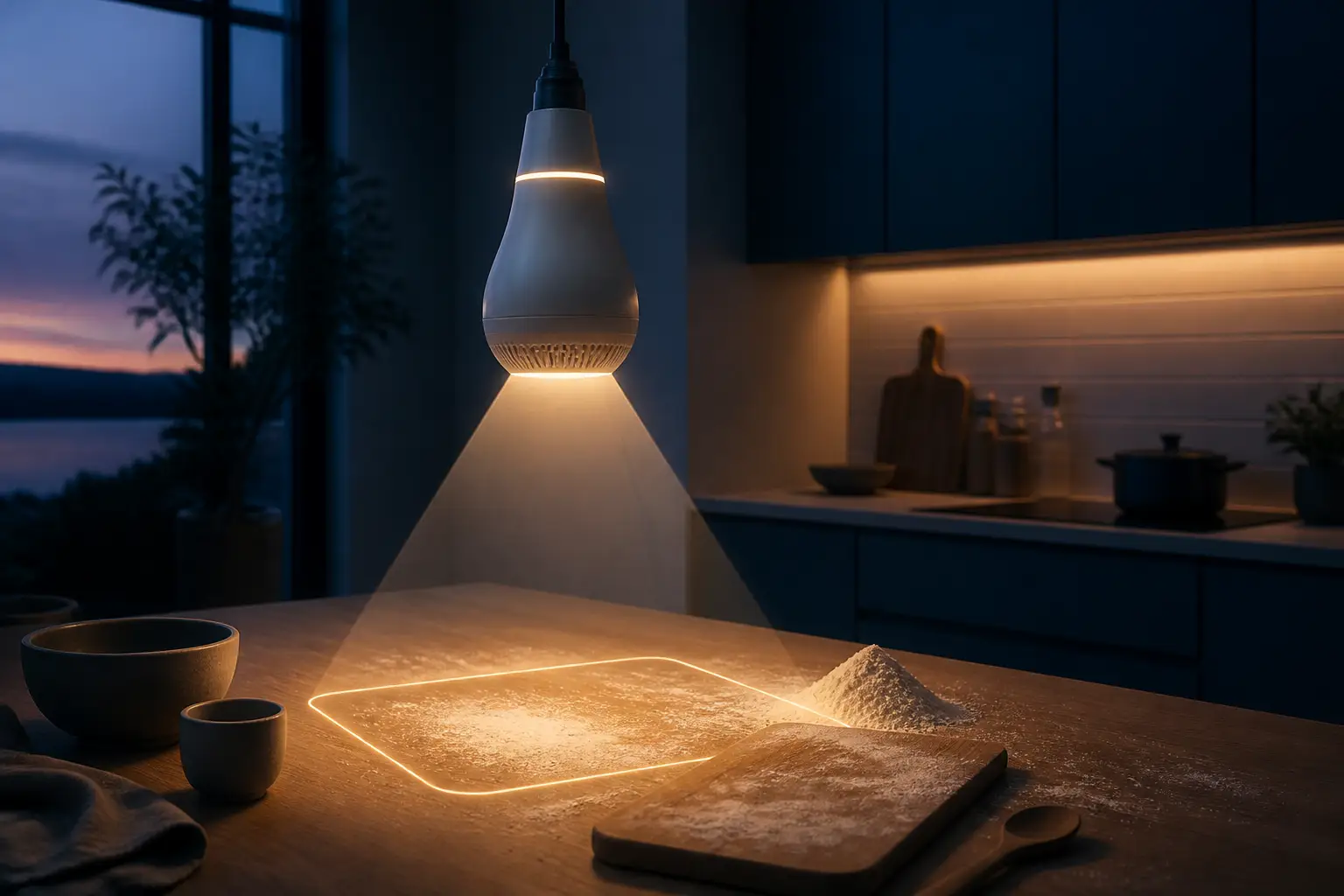
Here's a claim that will annoy both camps: skeuomorphism never died because users hated it. It died because it was expensive — in pixels, in GPU cycles, and in designer hours — and flat design won on economics, not aesthetics. A new project making the rounds, DEsk, a full skeuomorphic Wayland desktop for Linux where windows are sheets of paper on a ray-traced walnut desk, is the first real test of that thesis in years. And it proves the point beautifully: the moment you decide the whole room is lit by one desk lamp, you've signed up for a rendering architecture that has more in common with a game engine than with GNOME Shell.
What a Skeuomorphic Desktop Actually Has to Render
Flat design is merciful to a renderer. A modern compositor like Mutter or KWin spends most of its life doing texture compositing: applications hand you buffers, you draw quads, you apply the odd rounded-corner shader and a drop shadow, done. The whole frame is essentially free on any GPU made in the last decade, which is exactly why flat UI took over — it costs nothing and scales to any resolution with a simple transform.
Skeuomorphism breaks every part of that bargain. The moment your design language says "this window is a sheet of cream paper with fibre, thickness, and a dog-eared corner," you need:
- Material shading — paper isn't a colour, it's a subsurface-ish diffuse response with fibre texture. That's per-pixel work, not a fill rect.
- Consistent lighting — every object in the scene must agree about where the light is. One desk lamp means one shadow map (or ray query) that everything participates in, including live window contents.
- Contact shadows — a window "lying on a desk" needs ambient occlusion where the paper meets the walnut, or the illusion collapses instantly.
- Deformation — DEsk lets you lift the paper's corner to peek at the back of the sheet, and crumple windows into a ball when you close them. That's vertex displacement on a live texture, not a scale animation.
None of this is individually hard. Game engines have done it for decades. But a desktop compositor has constraints a game doesn't: the content of those "paper sheets" is arbitrary application output updating at up to 60fps, and you don't get to precompute anything about it. You're shading a live video feed as if it were ink on fibre.
The Compositor Becomes a Game Engine
DEsk's own architecture docs describe the move plainly: the room — desk, shelf, console, post box — is ray-traced on the GPU via GLES 3, with a CPU tracer as a fallback, and the result is cached per screen size. That one sentence contains the entire engineering strategy, and it's worth unpacking because it's the only sane way to do this.
The trick is the static/dynamic split. Ray tracing the room every frame would be absurd — even a modest path tracer wants seconds per frame on mid-range hardware. But the room is static. The desk doesn't move; the lamp doesn't move. So you trace it once at login ("the first login draws the room once: a few seconds on a GPU, longer without one"), cache the radiance, and thereafter the room is just a textured backdrop. The dynamic objects — paper windows, the drawer, letters in the post box — are forward-rendered on top, lit to match the cached scene.
// Sketch of the two-layer architecture a skeuomorphic shell converges on
struct frame {
// Layer 1: the room. Traced once at login, cached per output size.
texture room_cache;          // desk, shelf, post box, baked lamp light
// Layer 2: dynamic objects, forward-rendered each frame.
vector<object> paper_windows; // app buffers mapped onto paper quads
vector<object> drawer_items;
vector<object> notifications;
};
void render(frame *f) {
blit(f->room_cache);                       // one textured quad, nearly free
for (auto &o : f->paper_windows)
draw_paper(o);                         // fibre shader + fake AO + dog-ear
composite(f->drawer_items, f->notifications);
}
This is, not coincidentally, exactly how Myst worked in 1993: pre-rendered static scenes with dynamic sprites composited on top. Several observers noted DEsk gives off "heavy Myst vibes," and they're more right than they know — it's not just an aesthetic kinship, it's the same rendering architecture, arrived at because the same constraints (expensive global illumination, cheap compositing) still hold. The history nerd in me loves this. Thirty years of GPU progress, and the honest answer to "how do I ray-trace my desktop" is still "don't — trace it once and lie about it."
The multi-monitor design shows the same pragmatism. Instead of ray-tracing a bigger room for every screen, extra displays show "more of the desk's boards, running on from it" — the static backdrop extends, and the cached scene amortises across outputs. A screen unplugged mid-session just has its windows reparented onto a remaining one. Simple, but it sidesteps the genuinely hard problem of re-tracing on every hotplug event.
Skeuomorphism Taxes the GPU in Ways Flat UI Never Does
Let's be concrete about the tax, because "it's heavier" is doing a lot of unearned work in most discussions of this style. Compare what a flat compositor does for one window versus what DEsk's paper metaphor demands:
Flat: bind the client's wl_buffer as a texture, draw one quad with a shader that samples it, maybe round the corners with a signed-distance function, apply a cheap 9-tap shadow. Cost per window: a handful of texture reads per pixel, all from cache-friendly regions.
Paper: the client buffer is only the "ink." You also need a paper base layer (fibre texture, edge darkening, thickness lip), a dog-eared corner that's a separate folded geometry with its own lighting, a contact shadow against the desk that depends on the window's position in the scene, and lighting that agrees with the lamp baked into the room cache. And when the user drags an edge to "pull more paper out," the paper quad resizes independently of the content — you've decoupled window geometry from surface geometry, which no normal compositor does.
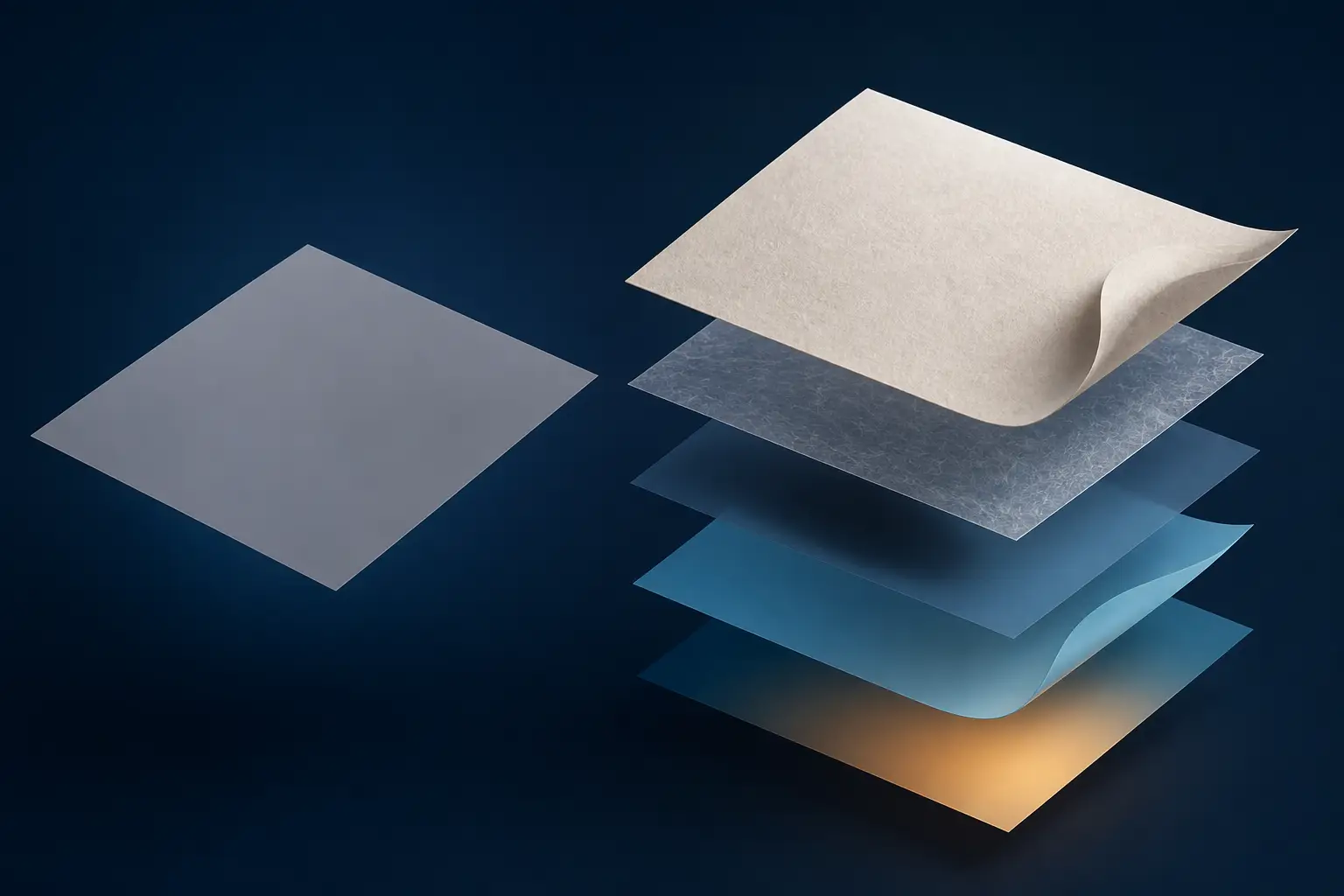
The real cost, though, isn't throughput — modern GPUs laugh at a few extra texture layers. It's pipeline complexity. A flat compositor's shader budget is one or two programs for the whole session. A skeuomorphic shell needs a small material system: paper, walnut, brass, glass (the clock's lamp lenses), fabric. Each material is a shader variant; each variant is a thing that can break on some driver; each one interacts with the shared lamp lighting, so they can't be authored in isolation. This is why the classic theming era of Enlightenment and GTK2 died, and it's the strongest counterpoint from practitioners: the window manager is the easy part. Every application still draws its own contents with GTK or Qt, and no amount of compositor-side walnut will make a libadwaita app look like it belongs on a physical desk. DEsk solves this only partially — client-side-decorated windows "sit on paper too," meaning the metaphor wraps apps rather than transforming them.
Wayland Makes This Easier and Harder at the Same Time
There's a reason a project like this exists now and not in 2010. Wayland's core architectural bet — the compositor owns the whole frame, every pixel passes through it — is exactly the bet a skeuomorphic shell needs to make. Under X11, an app could draw wherever it wanted, and the best you could do was a compositing manager desperately reparenting windows and hoping. Under Wayland, the shell receives clean, isolated surface buffers and has total freedom over how they're presented. If you want to map a surface onto a deformable sheet of paper with a dog-eared corner, Wayland is the first display system where that's merely hard rather than incoherent.
But Wayland also raises the bill. A desktop environment isn't a renderer; it's a renderer plus twenty years of protocol accretion: Xwayland for legacy apps, IBus bridging for input methods (DEsk supports typing into the bookshelf's index and the memo pad), PipeWire for the volume knob, logind for brightness and lid handling, MPRIS for the clock's media page, PAM for the lock screen. Every one of those is an integration surface that a project like GNOME spreads across hundreds of contributors. DEsk draws a firm line — "what it makes and what it borrows" — delegating networking, Bluetooth, printing and theming of other apps to existing free software. That borrowing strategy is the only way a small team ships a whole desktop, but it means the skeuomorphic illusion stops abruptly at the edges: the Wi-Fi settings are someone else's flat GTK panel.
Worth noting for anyone tempted to try: because the room is cached per screen size and the dynamic layer is plain GLES 3 forward rendering, the steady-state cost should be unremarkable — comparable to any compositor doing heavy effects. The pain points are the login-time trace on machines without a GPU (the CPU fallback exists, and it's slow), and the general roughness of a v0.1 beta: reviewers report inconsistent animations on stateful controls like the Control Panel's power key, which in a skeuomorphic UI isn't a cosmetic bug — when the key-turn animation misfires, you can't tell whether the machine will actually shut down. Skeuomorphism raises the stakes on animation correctness, because the animation is the state indicator. Flat design's great unappreciated virtue is that a toggle switch has exactly two drawable states and no in-between.
Why We Stopped Building Like This
The standard history says skeuomorphism was a crutch — real-feeling metaphors to teach people touchscreens — and once users grew up, we threw away the leather stitching. That story is mostly wrong, and DEsk is useful precisely because it exposes the actual economics. Skeuomorphism died when two things happened at once: Retina displays quadrupled the pixel counts that hand-painted textures had to cover, and mobile made UI run on constrained GPUs sipping from batteries. Flat vector UI scales for free; a brushed-metal texture at 1x, 2x, and 3x does not. Apple's iOS 7 redesign wasn't taste evolving; it was a rendering budget being slashed. If you've read about how GPU-accelerated terminals went from TTY glyph grids to full shader pipelines, you've seen the same trade from the other direction — we spend GPU freely within an app's content, but chrome itself went on a diet.
There's also a deeper reason that has nothing to do with GPUs: consistency doesn't compose. One designer can make a gorgeous physical metaphor; a thousand third-party developers cannot. The bookshelf metaphor works for DEsk's own apps. The moment Firefox renders its own flat grey UI onto the paper, you're looking at a screenshot taped to a prop. The Hacker News thread nailed this from two directions at once — one commenter nostalgic for GTK2's themeable era, another pointing out that modern toolkits "seem designed to resist themes." The desktop can be a desk; the apps never will be. The metaphor leaks, and everyone who's built a themed environment knows the leak is fatal to the illusion. It's the same gap that makes UX anti-patterns so persistent: the surface is easy to fix, the ecosystem isn't.
Where the Contrarian Claim Breaks Down
I said skeuomorphism lost on economics, and I believe that. But honesty requires the concessions, because DEsk's own rough edges supply them.
First, some of the cost isn't rendering at all — it's interaction ambiguity. A physical metaphor borrows the user's real-world expectations, and physics has no undo. When closing a window is "crumpled into a ball and tossed," that's charming exactly once and slightly alarming the fortieth time you reflexively close the wrong window. Flat chrome's abstractness is a feature: a small × is a promise, not a performance. Second, statefulness. Physical objects must always look like what they are; a stuck key-turn animation isn't a janky transition, it's a lie about whether your machine will power off. Skeuomorphic UI has to be correct in places flat UI is allowed to be approximate, and correctness in animation is brutally expensive in QA time — as anyone who's shipped systems where the UI must faithfully reflect distributed state knows too well.
Flat design's great unappreciated virtue is that a toggle switch has exactly two drawable states and no in-between. A brass key has infinitely many, and every one of them is a bug report.
Third, accessibility and discoverability cut both ways. Multiple commenters suggested a literal desk metaphor could genuinely help elderly users who never formed a mental model of file systems — they learn where to click by rote and can't recover when it changes, because flat UI "has no inherent logic for them." A desk has logic: letters go in the post box, documents are paper, things you keep go in the drawer. That's a real argument, and dismissing it as nostalgia is lazy. But the same physicality that helps one user hides functionality from another: how do you discover that Super+D opens the drawer, or that a folded window can go in it? Physical affordances work when objects are at hand; keyboard shortcuts are pure learned abstraction either way.

What DEsk Is Really For
It would be a mistake to read DEsk as a proposal that we all work on ray-traced desks now. It won't happen, and the economics I opened with still hold: a platform vendor shipping to a billion devices cannot afford per-pixel material shaders on chrome, hand-tuned lamp lighting, and animation-correct brass keys. Flat design remains the right default for systems software the same way concrete is the right default for bridges.
What DEsk actually demonstrates is something the Linux desktop has needed proven for a decade: the compositor layer is now expressive enough to be a medium. Wayland plus a modern GPU gives a single determined developer a full-frame canvas with enough headroom to render a coherent world, not just arrange rectangles. The Myst-era trick — bake the expensive light, forward-render the dynamic layer — closes the performance gap that used to make this impossible. Whether the world someone builds is a nostalgic walnut desk, the Nostromo's flight deck that one commenter daydreamed about, or something nobody's imagined yet, is a matter of taste. The capability is the news.
There's a pattern here that keeps recurring in computing: a technology matures, its mainstream converges on the cheapest adequate aesthetic, and then hobbyists rediscover the expensive aesthetics as a form of craft. It happened with mechanical keyboards, with one-bit dithered art, with CRT shaders in emulators. Skeuomorphic desktops are next in that queue. They won't displace anything. They'll just remind us — the way DEsk's single desk lamp lighting a whole ray-traced room reminds us — that the flat grey rectangle was a budget decision all along, and budgets, unlike tastes, can be argued with.